Bathroom Exhaust Fan Not Pulling Air? Here’s Why
A bathroom fan that runs but moves little air usually traces to blocked intake air, a sagging duct, an oversized run, a stuck damper, or a weak motor.
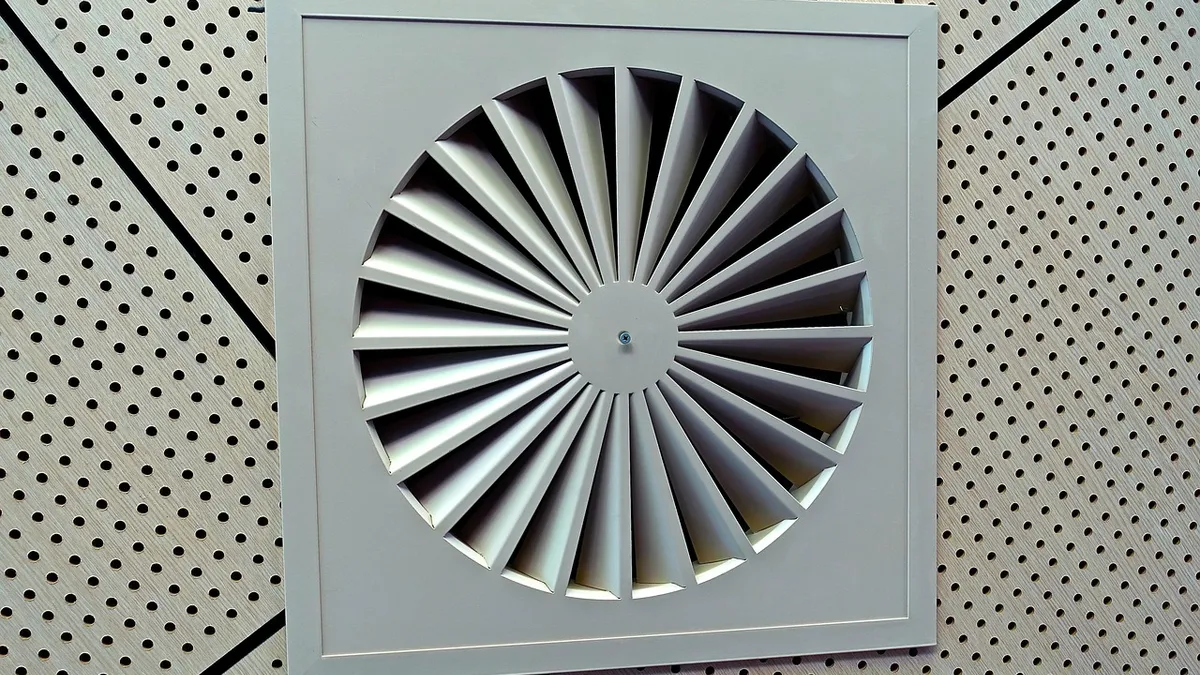
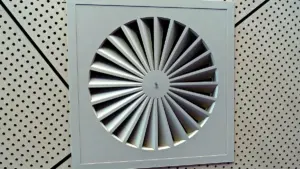
Image: MemoryCatcher via Pixabay
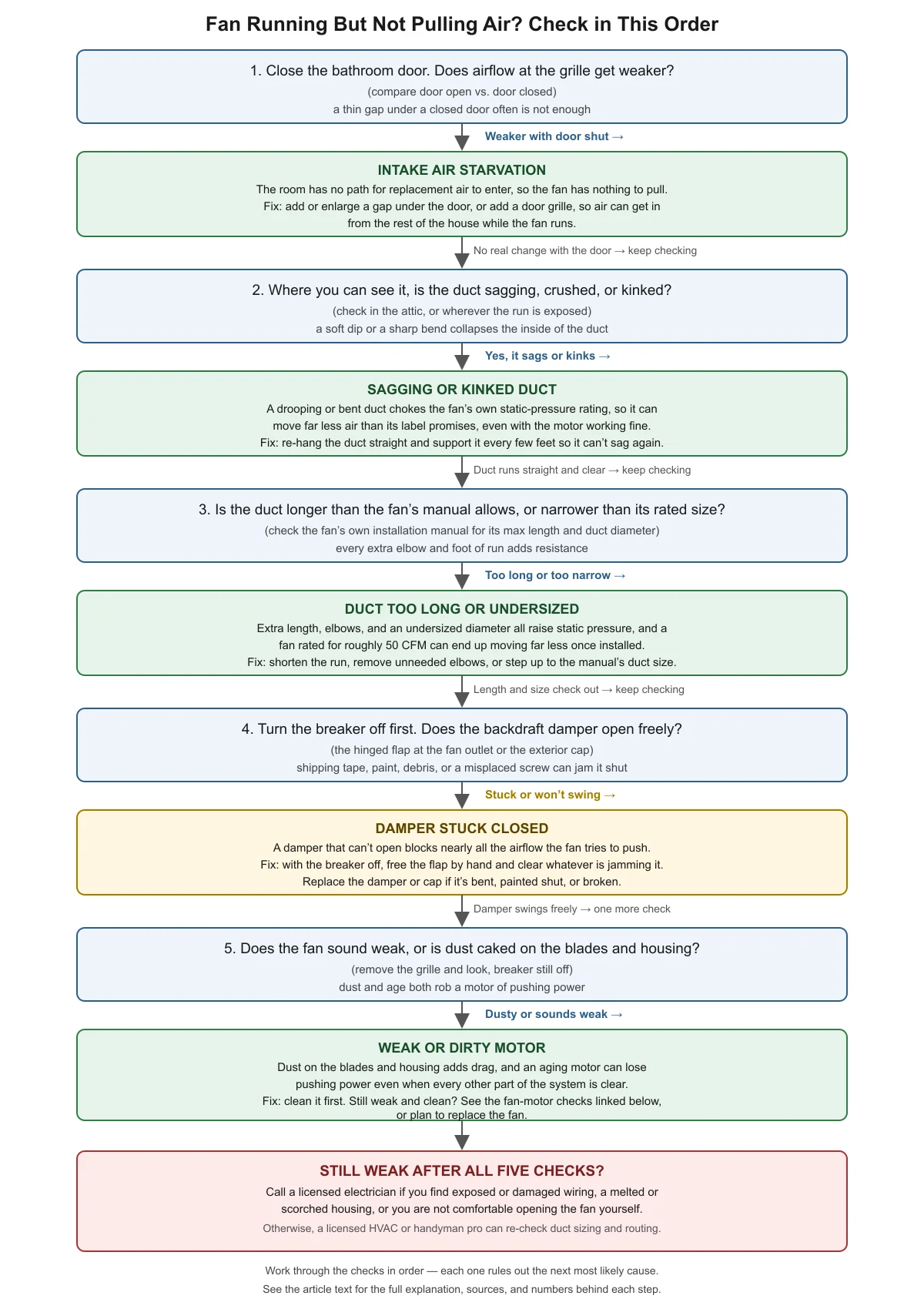
A bathroom fan that runs but barely pulls air almost always comes down to one of five things, checked in this order: not enough replacement air entering the room, a sagging or kinked duct, a duct that’s too long or too narrow for the fan, a stuck backdraft damper, or a motor that’s dusty or wearing out. Work through them in that order before you assume you need a new fan.
Key takeaways
- Check causes in this order: intake air, duct sag or kink, duct length or size, damper, then motor. The earlier causes are both the most common and the easiest to rule out first.
- Turn the breaker off before opening the fan housing or touching the damper, and call a licensed electrician if you find exposed or damaged wiring, a melted or scorched housing, or you’re not comfortable going further yourself.
- A sagging or kinked duct can quietly cut a fan’s real airflow to well below its rated CFM, even though the motor and damper are both working fine.
- The bathroom needs its own way for replacement air to get in. A tightly sealed door with no gap can starve the fan before the duct is even part of the problem.
- If the fan hums but the blades don’t turn at all, that’s a different, more specific problem — see bathroom fan humming but not spinning.
Before you touch anything: the safety basics
Turn the fan’s circuit off at the breaker panel before you remove the grille, open the housing, or touch the damper, and confirm it’s dead before you put a hand anywhere near the wiring. Checking a damper or vacuuming a motor housing both mean reaching inside the fan body, and that’s not a job to do with the circuit live.
Call a licensed electrician instead of continuing yourself if you find: exposed, melted, or scorched wiring or housing; a junction box that looks overloaded; or any sign the circuit has been overheating. The same caution applies if you’re simply not comfortable opening the fan housing yourself — a diagnosis isn’t worth a shock or a fire risk.
Why does a fan run but not pull air?
A bath fan’s motor is only one part of the system. Everything downstream — the air path into the room, through the fan, and out the duct — adds resistance. If any one link is blocked, narrowed, or missing, the fan can spin at full speed and still move a fraction of its rated air. That’s why the order below matters: the first checks catch most real-world cases and are the easiest to rule out without taking the fan apart.
Diagnostic order at a glance
The same five checks shown in the graphic above, in table form:
| Step | What to check | If this is the problem | Fix |
|---|---|---|---|
| 1. Intake air | Compare airflow at the grille with the door open vs. closed | Airflow drops noticeably with the door shut | Add or enlarge a gap under the door, or add a door grille |
| 2. Duct sag or kink | Look at the duct wherever it’s exposed (usually the attic) | Duct droops, is crushed, or has a sharp bend | Re-hang it straight; support it every few feet |
| 3. Duct length or size | Compare the actual run (length, elbows, diameter) to the fan’s manual | Longer or narrower than the manual allows | Shorten the run, cut elbows, or upsize the duct |
| 4. Backdraft damper | Breaker off, check that the flap swings freely | Damper is jammed, painted shut, or blocked | Free it by hand; replace if damaged |
| 5. Motor condition | Breaker off, look at blades and housing for dust; listen for a weak motor | Caked dust or an aging, underpowered motor | Clean it; replace the fan if it’s still weak when clean |
Step 1: Is the bathroom actually getting replacement air?
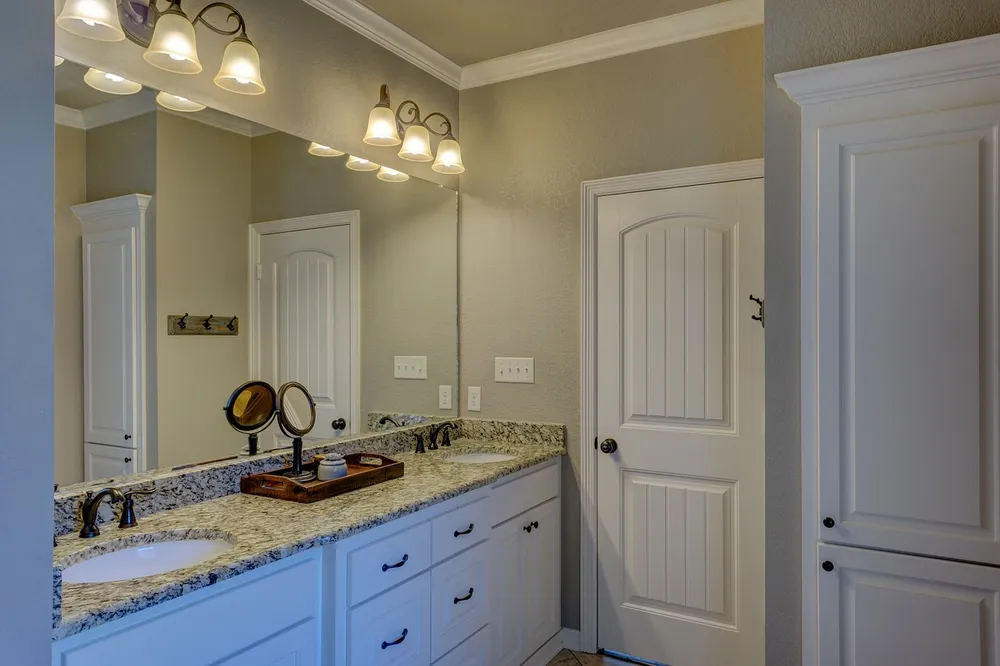
A bathroom fan doesn’t create airflow out of nothing — it pulls room air out and pushes it down the duct, which means an equal amount of air has to come in from somewhere else in the house. If the bathroom door is closed and sealed tight, with no gap underneath and no other opening, the room can run short of air to pull, and the fan’s real-world airflow drops even though nothing is mechanically wrong with it. Independent building-ventilation guidance on bath fan airflow makes the same basic point: for the fan to work as intended while the door is closed, the room needs a path for make-up air to enter from an adjacent space, such as a gap under the door, a grille in the door, or a supply register.
To check this, run the fan with the door open, then close the door and see if airflow at the grille clearly weakens. If it does, the fix is straightforward: add or enlarge the gap under the door, or add a louvered grille low in the door, so air can flow in from the hallway or an adjoining room while the fan runs.
Step 2: Is the duct sagging, crushed, or kinked?
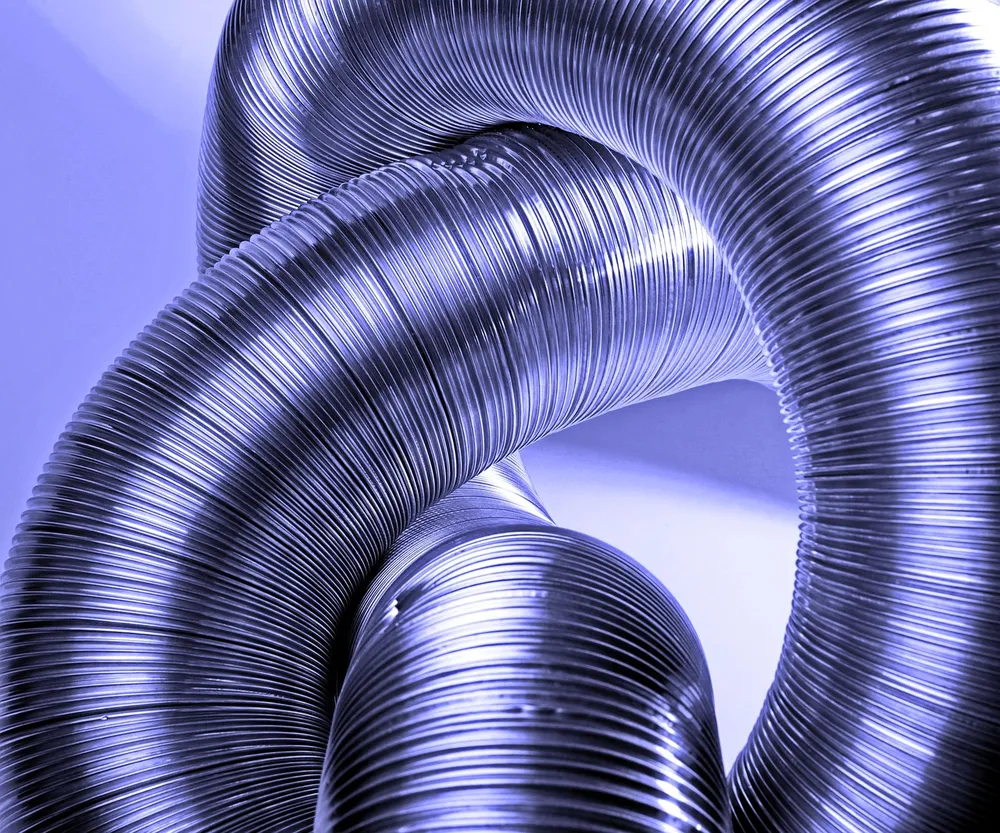
Flexible duct is the most common weak point in a bath fan system, and the easiest cause to overlook because it’s usually hidden in the attic. A section that droops between supports, or gets bent into a tight kink, partially collapses on the inside, so the usable opening shrinks even though the outside looks mostly intact. A respected trade publication’s guide to bath fan ductwork puts a number on how much this matters: a 50 CFM-rated fan connected to ductwork with enough static-pressure resistance can end up moving only 25 CFM in practice, roughly half its rated output, which is why the same guide recommends supporting duct every three feet with hangers or strapping to keep it from sagging. An independent ventilation-reference site covering bath vent duct routing makes the same point from another angle: stretching flexible duct tight, so the inside stays straight and smooth, is what keeps a long or sloppy run from cutting the fan’s real performance.
If you can safely access the attic, trace the duct by sight or by hand. A soft, sagging low spot or a hard right-angle kink is usually easy to feel even if you can’t see the whole run. Re-hang the duct so it runs in a straight, supported path, with gentle bends instead of sharp ones, and add hangers or strapping every few feet so it can’t sag again.
Step 3: Is the duct too long or too narrow for this fan?
Even a straight, well-supported duct can still choke a fan’s airflow if it’s simply longer, or has more elbows, than the fan was designed to handle. A widely installed residential fan line’s own installation manual states this plainly: duct length, elbows, and other factors increase static pressure, which can hinder the performance of most ventilation fans. The same manual’s installation diagram recommends leaving a straight run of about 2 to 3 feet of duct right at the fan outlet before the first elbow, specifically to cut resistance near the source. Every fan model has its own tested maximum run length and elbow count in its manual; there’s no single number for every fan, so check the specific model rather than assume.
Duct diameter matters just as much as length. A duct narrower than the fan’s rated size throttles airflow the same way a kinked duct does, just evenly along the whole run. A higher-CFM fan recently installed on existing, unchanged duct is a likely candidate for this. For the full CFM-by-room-size math and matching duct sizes, see how to vent a bathroom exhaust fan the right way.
Step 4: Is the backdraft damper stuck closed?
The backdraft damper is a hinged flap, either inside the fan’s duct connector or at the exterior cap, that’s supposed to open when the fan pushes air and close on its own when the fan is off. If it’s jammed shut, it blocks nearly all the airflow the fan is trying to push, no matter how strong the motor is. One common, easy-to-miss cause: some fans ship with the damper taped shut for transport, and that same manufacturer’s installation instructions include an explicit reminder to remove the tape from the damper before the unit is put into service. A damper can also get stuck from dried paint, built-up debris at the exterior cap, or a duct-connector screw that was driven in a spot that blocks the flap from swinging.
With the breaker off, remove the grille and check whether the damper moves freely by hand. If it’s taped, painted, or jammed with debris, clear the obstruction. If the damper itself is bent, cracked, or otherwise damaged, replace it rather than forcing it open, since a damper that doesn’t close fully when the fan is off lets outside air, insects, and drafts back in.
Step 5: Could the motor be weak or dirty?
If the first four checks come back clean, the fan itself is usually the remaining cause. Dust and lint build up on the blower wheel and motor housing over years of use, and that buildup adds drag the same way a restricted duct does — it just happens inside the fan instead of downstream of it. An aging motor can also simply lose pushing power over time, independent of how dirty it is.
With the breaker off, remove the grille and look at the blower wheel and motor housing. If there’s visible dust or lint buildup, vacuum it out with a brush attachment and wipe the housing down. If the fan still sounds weak or moves little air once it’s clean, the motor itself is the likely cause. A fan that hums but won’t spin at all, rather than spinning weakly, points to a different problem — see bathroom fan humming but not spinning for that specific check. A fan that’s also rattling or buzzing on top of weak airflow may have a loose blade or mount; see bathroom fan rattling or buzzing noise fix.
Still weak after all five checks?
At that point, you’re likely looking at something that needs a professional: a duct routed through more turns than any fan could overcome, or a termination cap that’s failing. Call a licensed electrician if you find exposed or damaged wiring, a melted or scorched housing, or a circuit that’s been overheating. A licensed HVAC contractor or handyman can re-check duct sizing and routing if the cause turns out to be structural.
And once the fan is actually moving the air it should, it’s worth knowing how long to run it. See how long to run a bathroom fan after a shower for a simple guide based on shower length and bathroom conditions.
Frequently asked questions
Why does my fan sound fine but barely pull any steam out?
A fan that sounds normal but moves little air is almost never a motor problem by itself. Work through the order above: check whether the room has enough replacement air with the door closed, then look for a sagging or kinked duct, then compare the duct’s length and size to the fan’s manual, then the damper, and finally the motor. Most real cases turn out to be the duct or the intake air, not the fan itself.
Can closing the bathroom door really stop a fan from pulling air?
Yes. The fan needs a path for air to replace what it’s exhausting, and a tightly sealed door with no gap underneath can cut that path off. Try running the fan with the door open and then closed to compare; if airflow clearly weakens when the door shuts, adding a gap or a door grille usually solves it without touching the fan or duct at all.
How can I tell if my duct is sagging without climbing into the attic?
If you can’t safely access the attic yourself, you can’t confirm this visually, but it’s still worth ruling out the intake-air check first since that needs no attic access at all. If airflow is still weak after that, a home inspector or HVAC contractor can trace the duct for you, which is also a reasonable step if you’re not comfortable working in an attic.
Is it safe to check the backdraft damper myself?
Yes, as long as you turn the breaker off first and confirm it’s dead before removing the grille. Checking whether the flap swings freely and clearing an obvious obstruction, like tape or debris, is a reasonable DIY check. Stop and call a licensed electrician if you find exposed or damaged wiring while you’re in there, rather than continuing past it.
How often should I clean a bathroom fan to keep it pulling air?
There’s no single verified interval from a standards body for this, but as a rule of thumb, vacuuming the grille, blower wheel, and housing once or twice a year keeps dust from gradually building up enough to noticeably reduce airflow. Clean it sooner if you notice the fan sounds different or the room clears more slowly than it used to.
Sources
- InspectApedia, Bath Vent Fan Makeup Air Supply — why a bathroom exhaust fan needs a source of replacement (make-up) air when the door is closed, and common sources for it. Checked November 12, 2026.
- InspectApedia, Routing a Bath Vent Duct Down & Out or Up Through an Attic or Roof — guidance on keeping flexible duct straight and taut to avoid cutting fan performance. Checked November 12, 2026.
- Fine Homebuilding (Taunton Press), The Basics of Bath Fans — static-pressure example of a 50 CFM-rated fan delivering about 25 CFM in practice, and the recommendation to support duct every 3 ft to prevent sagging.
- Panasonic Corporation of North America, WhisperGreen Select Installation Instructions — duct length and elbows increasing static pressure, the installation diagram’s 2-3 ft straight run before the first elbow, and the reminder to remove shipping tape from the damper before use.
bathroomexhaustfanventing.com Editorial Team. Last updated: November 12, 2026.

1 thought on “Bathroom Exhaust Fan Not Pulling Air? Here’s Why”