Bathroom Fan Smells Like It’s Burning? Do This First
A burning smell from a bathroom fan means switch it off, cut the breaker, and do not restart it. See the safety steps and when to call an electrician.
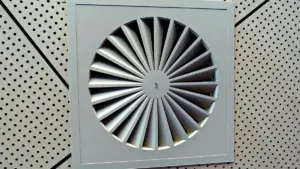
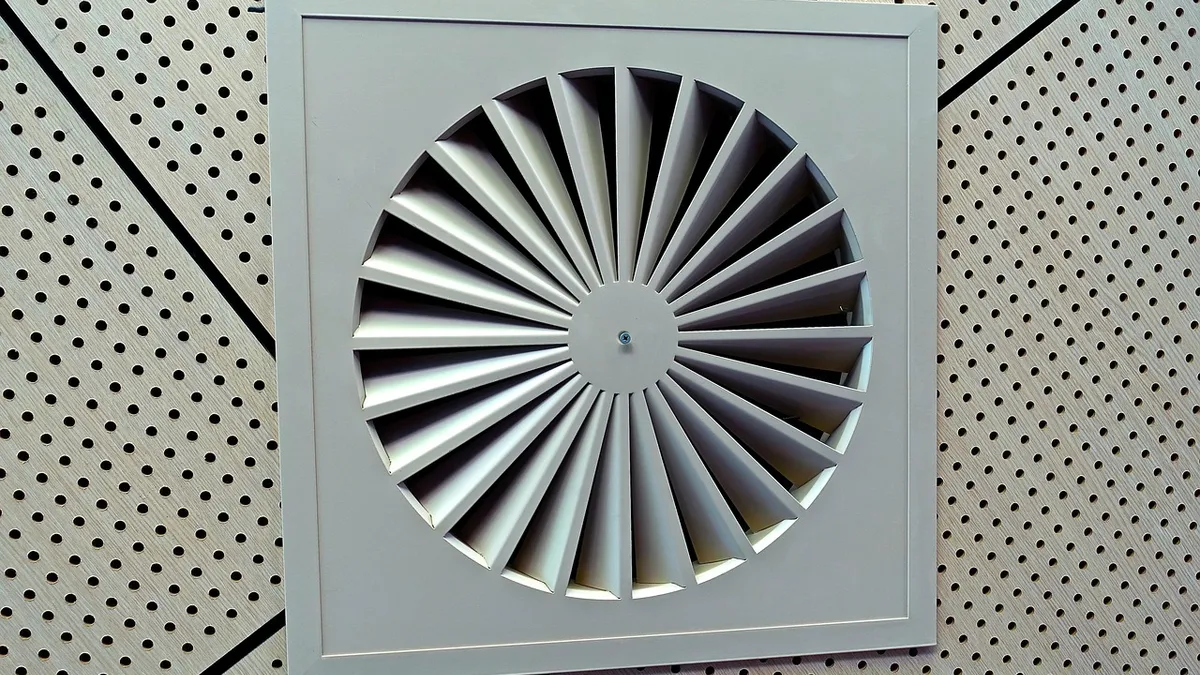
Image: PublicDomainPictures via Pixabay
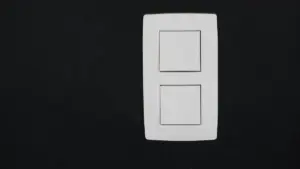
If your bathroom fan smells like it’s burning, turn it off at the wall switch, then turn off its breaker at the panel — don’t just flip the switch to check it. Don’t turn the power back on. If you see melted plastic, scorch marks, soot, or any smoke, leave it off and call a licensed electrician now, not later.
Key takeaways
- Cut the power two ways, in order: the wall switch first, then the circuit breaker at the panel. The switch alone doesn’t guarantee the circuit is dead.
- Never restore power to “test” a fan that smelled like it was burning. Restoring power can restart whatever was overheating.
- A burning smell is never a wait-and-see sign. Government guidance treats it the same as sparks or smoke: stop using the appliance and have it checked.
- Melted plastic, scorch marks, soot, or any visible smoke mean call a licensed electrician now. If you see active smoke or flames, leave the room and call 911 first.
- A burning smell that fades once the fan is off doesn’t mean the problem is gone — it means the fan was drawing power while something inside it was too hot.
Is a burning smell from a bathroom fan an emergency?
Treat it as one. A burning or acrid plastic smell coming from a fan that’s running means an electrical component inside it — the motor windings, a wire, or a connection — has gotten hot enough to start breaking down. The U.S. Consumer Product Safety Commission’s electrical safety guidance for bathrooms lists this directly: for small electrical appliances, it asks whether they’re working the same as always, “with no signs of damaged wiring or parts? (smoke, sparks, and noises, etc.),” and if not, its instruction is to “discard or have repaired,” because “irregular operation is a sign of damage to electrical parts” that “can become a shock or fire hazard.”
That’s a smell, not yet smoke. The distinction matters for what you do next, covered below. But a smell alone is enough to stop using the fan and work through the safety sequence — don’t wait to see if it gets worse.
What to do right now: the immediate safety sequence
Work through these steps in order. Steps 1-3 apply the moment you notice the smell, before you look at anything else.
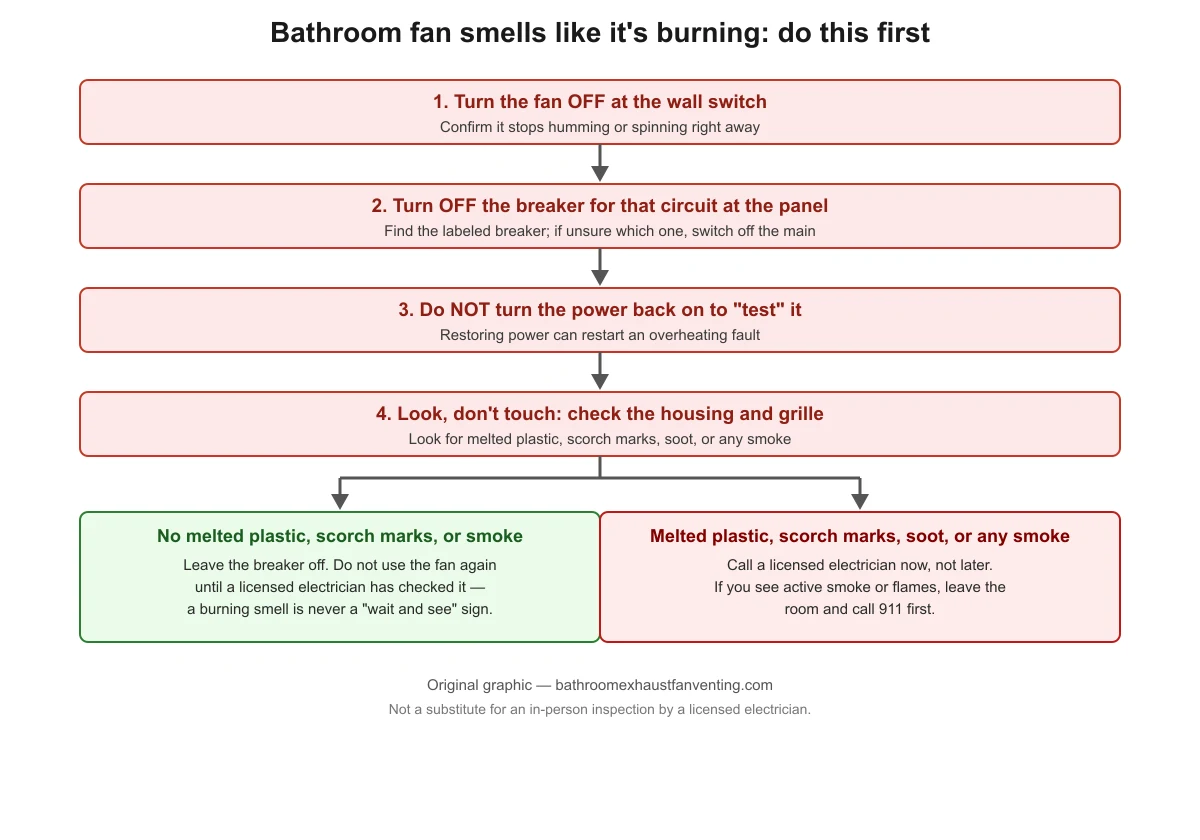
| Step | Do this | Why |
|---|---|---|
| 1. Switch off | Turn the fan off at its wall switch right away. | Stops it drawing current immediately, while you get to the panel. |
| 2. Breaker off | Go to the electrical panel and turn off the breaker for that circuit. If you don’t know which one it is, switch off the main breaker until you can check. | A wall switch can fail or only cut power to part of the circuit. The breaker confirms the circuit is dead. |
| 3. Don’t restart it | Leave the breaker off. Don’t flip it back on “just to check” if the fan still runs or still smells. | Whatever was overheating is still there. Restoring power can let it keep heating or arc again. |
| 4. Look, don’t touch | Once the breaker is off, you can safely look at the grille and visible housing for melted plastic, scorch marks, soot, or discoloration. Don’t remove the housing or touch the motor. | Tells you whether this is a call-now situation or a check-before-next-use situation. |
| 5a. No visible damage | Leave the breaker off. Don’t use the fan again until a licensed electrician has checked it. | A burning smell with no visible cause yet still means a wiring or motor fault is in progress. |
| 5b. Melted plastic, scorch marks, soot, or smoke | Call a licensed electrician now, not later. If there’s active smoke or flames, leave the room and call 911 first. | These are visible signs of overheating that has already damaged a component — a recognized fire hazard, not a minor issue. |
What if you actually see smoke, not just smell it?
That changes the response. A smell alone means switch off, breaker off, call an electrician. Visible smoke, sparking, or flames means leave the bathroom, close the door behind you if you can do so safely, and call 911 before you do anything else — including before you go looking for the breaker panel if it means walking back past the fan. Only go back for the breaker if you can reach the panel without passing through smoke.
This is also exactly the situation real bath-fan recalls describe. The U.S. Consumer Product Safety Commission’s 2016 recall of Broan-NuTone L500 ventilation fans states plainly that “the fan motor can overheat, posing a fire hazard,” and told consumers to “immediately turn off and unplug the recalled fans.” A separate 2012 recall of bathroom exhaust fans with a heater and light, sold at Lowe’s and made by Delta Electronics, followed eleven real reports of “the fan overheating with smoking or flames within the fan housing” before the heater blades were found to sometimes fail to rotate properly. Both recalls exist because overheating bath-fan motors are a documented, repeat cause of real fire hazard reports to a federal safety agency — not a hypothetical.
When should you call a licensed electrician now, not later?
Call now, rather than waiting to see if it happens again, if any of these apply:
- You see melted plastic, scorch marks, soot, or discoloration anywhere on the fan housing, grille, or nearby ceiling.
- You see or smell any smoke, even briefly.
- The smell comes back the next time you so much as flip the breaker back on to check.
- The breaker trips when you try to restore power.
- You’ve ever felt even a slight shock (not static) from the fan, its switch, or the housing.
- The smell started right after the fan was installed, serviced, or the bulb/heater element was changed.
The National Fire Protection Association’s electrical safety checklist lists exactly this kind of symptom among the reasons to get professional help, instructing homeowners to “call a qualified electrician or your landlord if you have… a burning or rubbery smell coming from an appliance,” alongside discolored or warm outlets and sparks from an outlet. The CPSC’s bathroom checklist draws the same line for appliances that have ever given someone a shock: “Do not touch the appliance until it has been checked by an electrician. Turn the power off to the appliance at the circuit breaker.” Neither guidance treats this as optional or as something to monitor for a few days first.
What usually causes the smell, once the power is confirmed off?
You don’t need to diagnose this yourself, and nothing below changes the safety sequence above. It’s background for the electrician’s visit, not a DIY repair list:
- A failing motor. Worn or seized bearings can make a motor work harder and run hotter than it’s designed to, which can overheat the windings inside it.
- A wiring or connection fault. A loose connection anywhere in the circuit, from the wire nuts in the junction box to the wall switch itself, can arc and heat up under load.
- A fan-with-heater unit where the heater blades aren’t turning properly. This is the exact failure described in the 2012 CPSC recall above — the heating element kept running without the blower moving air across it the way it’s designed to.
- Dust burning off a heating element the first time it’s used in a while (fan-with-heater models only, not a plain exhaust fan). This can produce a brief odor without a fault. It still isn’t something to assume on your own — if the smell doesn’t clear quickly and completely once the unit is off, treat it as a fault, not dust.
If your fan hums but the blades don’t spin, that’s a different symptom with its own safe check order — see our guide to a bathroom fan humming but not spinning. That guide covers testing a stalled motor; it assumes there’s no burning smell. If you have both symptoms together, follow the safety sequence on this page first.
Once an electrician has cleared the wiring and confirmed the only remaining step is swapping the fan unit itself for a new one on the same circuit, see our guide to replacing a bathroom exhaust fan without rewiring. That guide is for a straightforward like-for-like swap only — not for a circuit an electrician hasn’t already confirmed is safe.
And if you’re starting over with a full re-vent or a new install rather than a repair, our complete guide to how to vent a bathroom exhaust fan the right way covers duct sizing, routing, and code basics for the new unit.
Frequently asked questions
Is it ever safe to leave the fan running if it smells like it’s burning?
No. Turn it off at the wall switch the moment you notice the smell, then turn off its breaker at the panel. A burning smell means a component inside the fan is already running hotter than it should. Continuing to run it risks letting that fault get worse rather than giving you more time to decide what to do.
I turned the fan off and the smell is gone. Is it safe to use again?
Not until a licensed electrician has checked it. The smell fading when the fan is off just means the component causing it has cooled down, not that whatever made it overheat in the first place is fixed. Leave the breaker off and don’t restore power to test it yourself.
What if I see actual smoke or flames, not just a smell?
That’s more urgent than a smell alone. Leave the room, and call 911 before doing anything else, including going for the breaker, unless you can reach the panel without walking through smoke. A smell with no visible smoke still needs an electrician, but doesn’t require evacuating the room first.
Could the smell just be dust burning off, not a real problem?
Only on fan-with-heater units, and only the first time the heater runs after sitting unused, when it can produce a brief odor as dust on the element burns away. A plain exhaust fan motor doesn’t have a heating element, so this explanation doesn’t apply to it. On any unit, if the smell doesn’t clear quickly and fully once it’s off, don’t assume dust — have it checked.
Do I need an electrician even if the breaker never trips?
Yes. A breaker trips when current draw crosses a threshold; a fault can overheat a motor or connection well before it draws enough current to trip anything. Government electrical safety guidance lists a burning smell itself, not just a tripped breaker, as a reason to call a qualified electrician.
Sources
- U.S. Consumer Product Safety Commission, Home Electrical Safety Checklist (Pub. 513, July 2008) — guidance on irregular appliance operation, shock hazards, and when to involve an electrician. Checked November 12, 2026.
- National Fire Protection Association, Electrical Safety: Checklist (NFPA, 2017) — lists a burning or rubbery smell from an appliance among the reasons to call a qualified electrician. Checked November 12, 2026.
- U.S. Consumer Product Safety Commission, Broan-NuTone Recalls Ventilation Fans (May 31, 2016) — recall of L500 bathroom ventilation fans due to a motor overheating fire hazard. Checked November 12, 2026.
- U.S. Consumer Product Safety Commission, Exhaust Fans Sold at Lowe’s Stores Recalled Due to Fire Hazard (June 28, 2012) — recall of bathroom fans with heater and light following reports of overheating with smoking or flames in the housing. Checked November 12, 2026.
bathroomexhaustfanventing.com Editorial Team. Last updated: November 12, 2026.