Bathroom Fan Rattling or Buzzing? Noise-to-Fix Guide
A rattle usually means a loose grille or housing, a buzz means dust or a loose motor mount, and a squeal means a worn bearing. Match the sound to the fix.
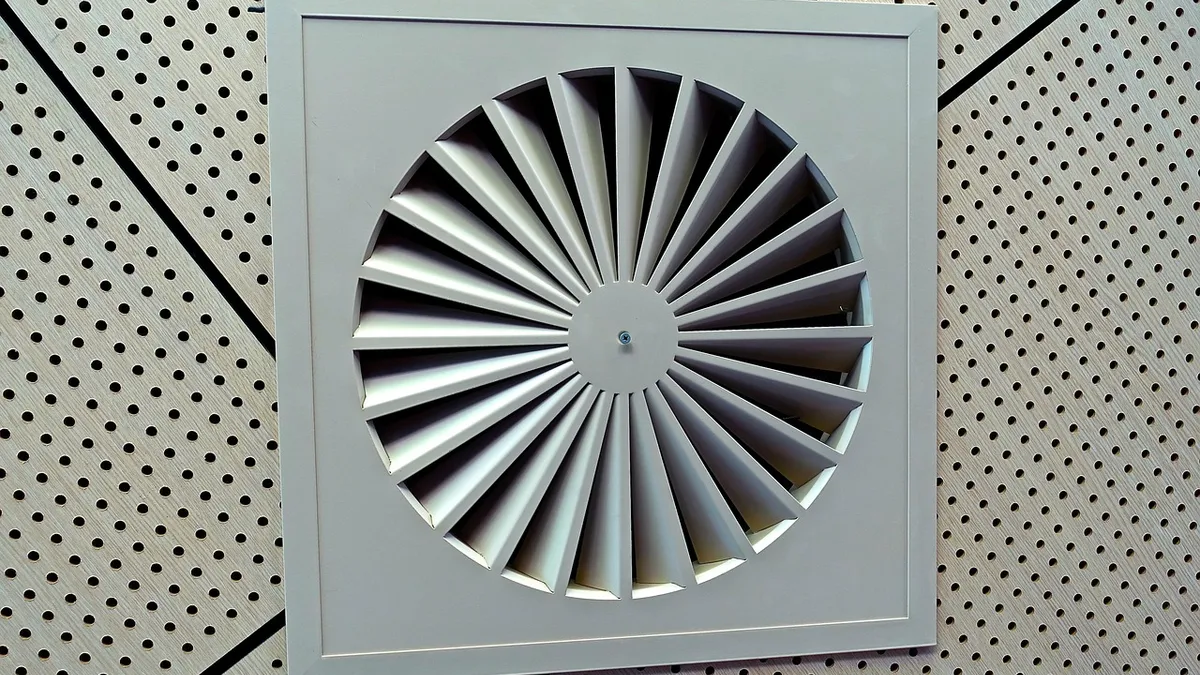
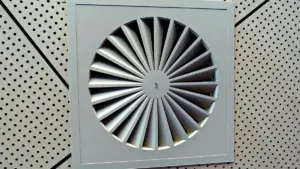
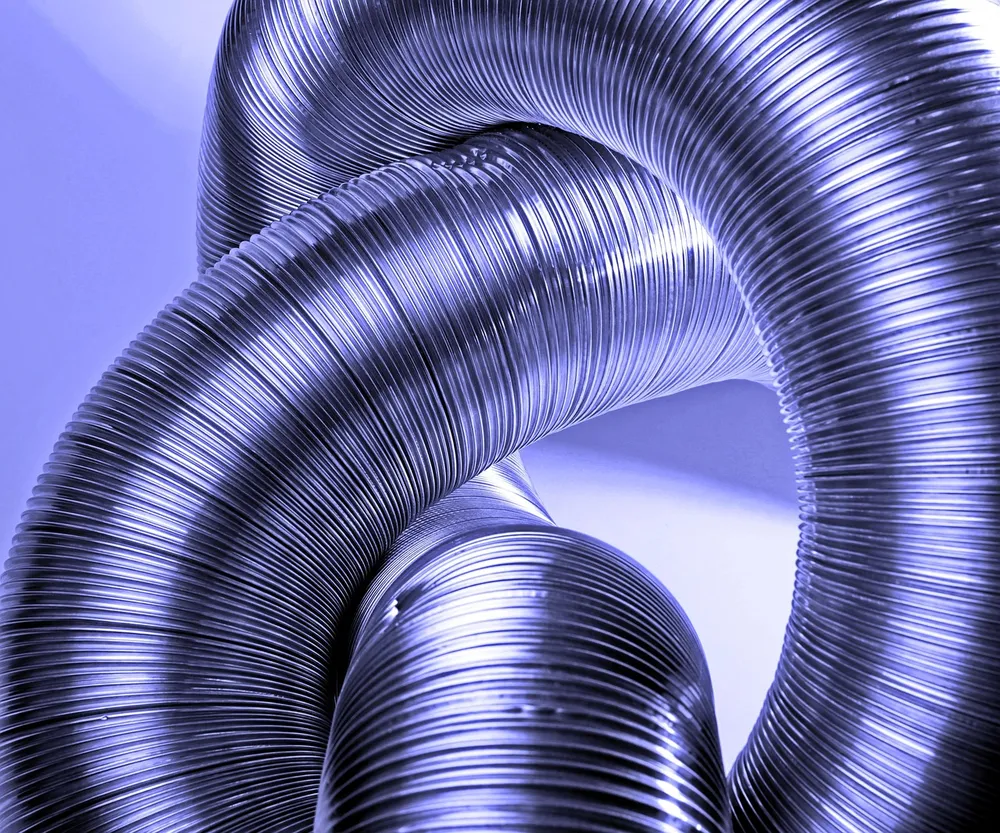
Image: MemoryCatcher via Pixabay
A rattle usually means something is loose — the grille, the housing, or a duct touching a joist. A buzz usually means dust has unbalanced the blower wheel or the motor mount has worked loose. A steady squeal or grinding sound usually means a worn motor bearing. Matching the sound to the cause below tells you whether this is a five-minute tightening job or a motor replacement.
Key takeaways
- Match the sound first, then the fix. Rattle = loose part. Buzz = dust or a loose motor mount. Squeal or grinding = a worn bearing. One generic “tighten and clean” answer doesn’t cover all three.
- Cut the power at the breaker before you touch anything. Don’t open the housing or touch the blower wheel while the fan is wired to power, even if it’s switched off at the wall.
- Dust is the single biggest preventable cause. Construction dust and drywall residue built up around the motor and impeller are a documented cause of noisy, unbalanced blower wheels, per the fan manufacturer’s own service instructions.
- Duct noise is a separate category from motor noise. A rigid duct run resting against framing transmits vibration into the room; insulated flexible duct between the fan housing and the rigid run absorbs it instead.
- A dry or worn bearing isn’t something you lubricate. Modern bath-fan motors are sealed. The fix is replacing the motor or the whole fan, not oiling it.
What does each bathroom fan noise mean?
A bathroom fan running normally is close to background noise. The industry measures this in sones, a loudness scale where doubling the sone number means doubling how loud a fan sounds to a listener; most ENERGY STAR–qualified bathroom fans rated 10 to 200 CFM are capped at 2.0 sones. So when a fan that used to be quiet starts rattling, buzzing, or squealing, that’s a change worth tracing to a specific cause rather than writing off as normal aging.
The three noise categories point to different parts of the fan, and they call for different fixes. Treating all three the same — “tighten some screws and clean it” — fixes a rattle or a buzz but does nothing for a bearing that’s actually failing, and it risks having you repeatedly open a housing that has a real electrical fault instead.
Which noise means which problem?
Turn the fan off at the wall switch, then switch its breaker off at the panel before you remove the grille or touch the blower wheel for any of the checks below. Confirm the right breaker by checking that the switch no longer makes the fan respond.
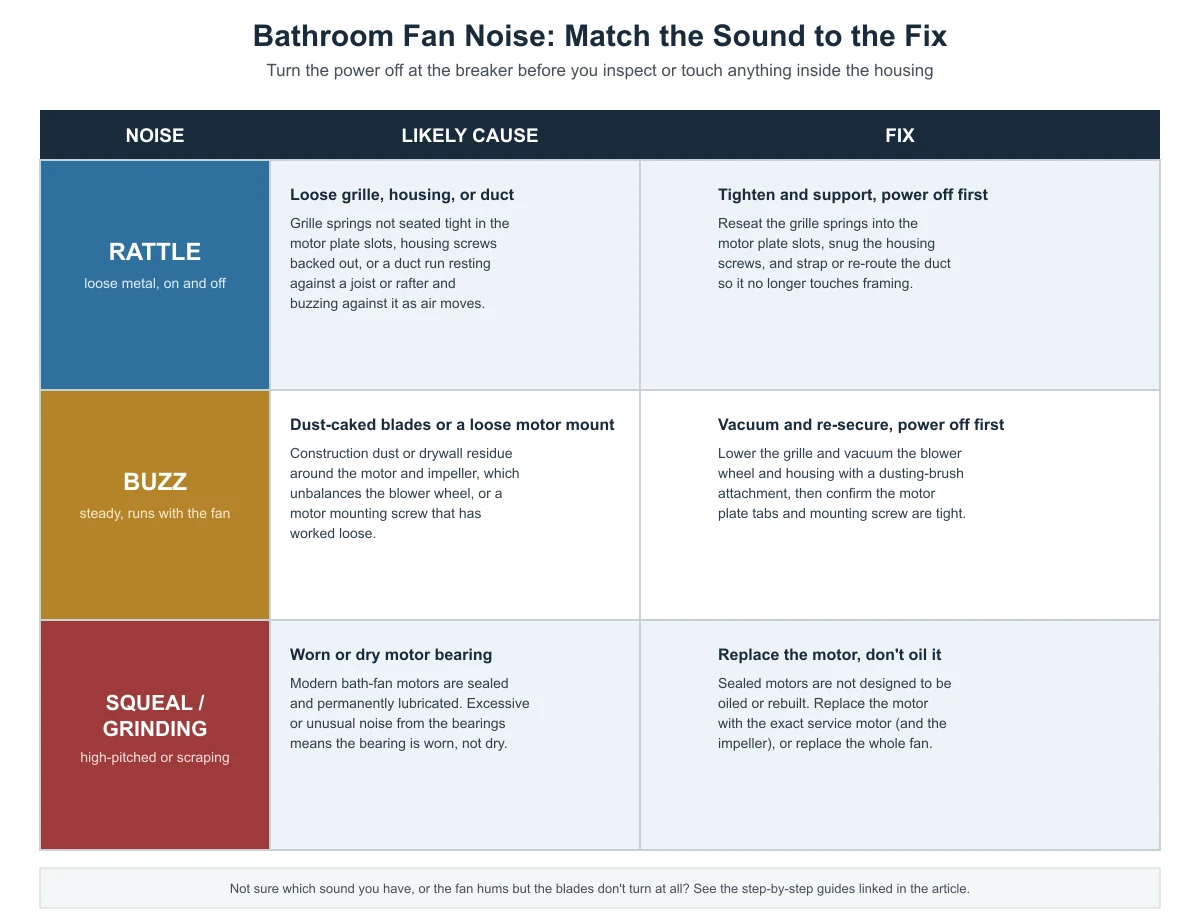
| Noise | Likely cause | Fix |
|---|---|---|
| Rattle (loose metal, on and off, often changes with fan speed) | Grille springs not seated tight in the motor plate slots, housing screws backed out, or a duct run resting against a joist or rafter and buzzing against it as air moves. | Reseat the grille springs into the motor plate slots, snug the housing mounting screws, and strap or re-route the duct so it no longer touches framing. |
| Buzz (steady, runs for as long as the fan runs) | Construction dust or drywall residue built up around the motor and impeller, which unbalances the blower wheel, or a motor mounting screw that has worked loose. | With the power off, lower the grille and vacuum the blower wheel and housing interior with a dusting-brush attachment, then confirm the motor plate tabs and mounting screw are tight. |
| Squeal or grinding (high-pitched or scraping, often gets worse over weeks) | A worn or dry motor bearing. Modern bath-fan motors are sealed and permanently lubricated, so this points to bearing wear, not a lubrication gap. | Replace the motor with the exact service motor (the impeller should be replaced with it), or replace the whole fan if a matching service motor isn’t available. |
Rattle: loose grille, housing, or duct
A rattle is almost always something mechanical working loose rather than a motor problem, which is also why it’s the easiest of the three to fix. Start with the grille: it normally clips onto the motor plate with two spring clips, and if one spring isn’t fully seated in its slot, the grille itself can vibrate against the ceiling or wall every time the fan runs. Reseating it usually takes care of the noise immediately.
If the grille is solid, check the housing’s mounting screws next, then look at the duct run if you have attic access. A rigid metal duct that rests directly against a joist, rafter, or the underside of the roof deck can tap or buzz against that framing member as air pulses through it. The fix is mechanical, not electrical: support the duct with a strap so it has clearance from framing, rather than letting it touch and transmit vibration into the structure.

Buzz: dust-caked blades or a loose motor mount
A buzz that holds steady for as long as the fan runs usually traces back to dust. The manufacturer’s own installation and maintenance instructions for its bathroom fan motor assemblies are explicit about this: they warn installers to keep drywall spray and construction dust off the motor and impeller specifically “to avoid motor bearing damage and noisy, unbalanced impellers.” Once enough dust cakes onto one side of the blower wheel, the wheel is no longer perfectly balanced, and an unbalanced wheel buzzes and vibrates at speed the way an unbalanced washing machine load does.
The same instructions describe the fix for ordinary operating noise as routine cleaning: with the power off, lower or remove the grille and vacuum the interior of the fan with a dusting-brush attachment. If the buzz continues after a thorough cleaning, check whether the motor itself has worked loose from its mounting tabs or screw; a motor that can shift slightly inside the housing will buzz against the housing wall as it runs.
Squeal or grinding: a worn motor bearing
A high-pitched squeal or a grinding sound, especially one that gets louder over several weeks, points toward the motor bearing rather than anything you can reach from outside the housing. Bath-fan motors sold in the last couple of decades are built as sealed, permanently lubricated units; there’s no oil port to add a drop of oil to and no routine lubrication step in the manufacturer’s maintenance instructions. One manufacturer’s own service documentation treats bearing noise as a parts-swap problem rather than a maintenance task: once the bearings themselves are making the excessive or unusual noise, the instructed fix is a full motor replacement using the matching service motor, with the impeller swapped out at the same time rather than reused.
That’s a meaningfully different repair than tightening a screw or running a vacuum, but it isn’t automatically an electrician call. On at least one common fan-motor-assembly design, the motor connects to the housing through a plug-in receptacle rather than hard-wired splices, and the whole motor and blower assembly drops out as a single unit once two tabs are released and one screw is removed. Check your own fan’s design before assuming this applies — not every model uses a plug-in connector, and if the wiring inside looks different from a simple plug-and-screw setup, that’s a job for a licensed electrician or appliance technician instead.
Could the noise be coming from the duct instead of the fan?
Not every noise problem is inside the fan housing. The duct connecting the fan to the outside has a real, documented effect on how loud the fan sounds indoors. The U.S. Department of Energy and EPA’s ENERGY STAR program requires every certified fan’s installation instructions to tell installers that “ducting has a strong effect on the air flow, noise and energy use of the fan,” and to recommend the shortest, straightest duct routing possible while avoiding smaller ducts than the fan is rated for.
The duct material matters as much as its routing. The Home Ventilating Institute, the trade association that certifies airflow and sound ratings for residential ventilating fans, is specific on this for remote-mounted fans: insulated flexible duct between the ceiling grille and the fan attenuates noise well, and with roughly eight feet of it in place, almost no fan noise should be evident in the bathroom. Rigid metal duct, by contrast, does not attenuate sound effectively. If your duct connection is rigid pipe all the way to the housing with no flexible section, that connection — not a worn part — may be why the fan sounds louder than it should, even after you’ve cleaned and tightened everything inside the housing.
If your fan runs fine but the airflow itself feels weak rather than noisy, that’s a different problem with a different diagnostic path — see our guide to a bathroom exhaust fan not pulling air. And if the fan hums steadily but the blades don’t turn at all, rather than rattling, buzzing, or squealing while it runs, that’s a stalled-motor problem, not a loose-part or duct problem — see our guide to a bathroom fan humming but not spinning for the safe check order on that symptom instead.
When should you stop and call a licensed electrician?
Stop troubleshooting the noise yourself and call a licensed electrician if any of these apply:
- You notice a burning smell, melted plastic, or scorch marks at the fan, the switch, or the junction box instead of (or along with) the noise — see our bathroom fan burning smell safety guide and stop immediately.
- You’ve ever felt even a slight shock (not static) from the switch, the fan housing, or the grille.
- The breaker trips when you try to restore power.
- Opening the housing reveals wiring that isn’t a simple plug-in motor connector, or anything that doesn’t match a standard factory setup.
- There’s no ground wire, or the wiring looks damaged, brittle, or improvised.
Breaker-first practice here follows the same logic as workplace lockout/tagout rules: the Occupational Safety and Health Administration’s guidance on controlling hazardous energy exists because an unexpected restart during servicing “can result in serious injury or death,” which is exactly why you confirm a circuit is off, rather than assume it, before opening anything.
If you’re planning to replace the fan entirely rather than chase down a specific noise, see our complete guide to how to vent a bathroom exhaust fan the right way for duct sizing, routing, and code basics.
Frequently asked questions
Is it normal for a bathroom fan to make some noise?
Some running noise is normal. Most ENERGY STAR–qualified bathroom fans rated 10 to 200 CFM are built to stay at or under 2.0 sones, a level most people find comparable to a quiet refrigerator. A new rattle, buzz, or squeal that wasn’t there before isn’t “normal aging” in a vague sense — it’s a sign one specific thing has changed, and it’s usually traceable with the noise-to-cause table above.
Can I fix a noisy bathroom fan myself?
For a rattle or a buzz, yes, in most cases: reseating the grille, tightening housing or motor-mount screws, and vacuuming dust out of the housing with the power off are standard homeowner-level tasks. A squeal or grinding bearing noise means replacing the motor, which is a bigger job but still DIY-reasonable on fans with a plug-in motor connector. If the wiring inside doesn’t look like a simple plug-and-screw setup, call an electrician instead.
Why has my bathroom fan gotten louder over the past year?
Gradually, not suddenly, is the normal pattern. Dust slowly accumulates around the motor and impeller every time the fan runs, which both unbalances the blower wheel and can contribute to bearing wear over time, according to the manufacturer’s own maintenance guidance. A fan that was quiet a year ago and now buzzes or rattles has usually just reached the point where that gradual buildup is audible, not experienced a sudden failure.
Does the type of duct affect how loud the fan sounds in the bathroom?
Yes. The Home Ventilating Institute notes that insulated flexible duct between the fan housing and the rigid duct run attenuates sound well, to the point that almost no fan noise should reach the bathroom with enough of it installed. Rigid duct connected straight through, with no flexible section, does not attenuate sound effectively and can make an otherwise normal fan sound louder than its rating suggests.
When should I stop troubleshooting and call a licensed electrician?
Stop and call an electrician if you notice a burning smell, scorch marks, or melted plastic; if you’ve ever felt a shock from the fan or its switch; if the breaker trips when you restore power; or if the wiring inside the housing doesn’t match a simple, standard setup. Those are signs of a wiring problem, not a loose part or a dusty blower wheel.
Sources
- Broan-NuTone LLC, Fan Motor Assembly Installation Instructions, Model C350BNR (Part No. 1115574A) — manufacturer warnings and maintenance instructions on dust, unbalanced impellers, bearing noise, and motor replacement. Checked November 12, 2026.
- U.S. Environmental Protection Agency / Department of Energy, ENERGY STAR Program Requirements for Residential Ventilating Fans, Eligibility Criteria Version 4.1 — sone rating definitions, maximum sound levels, and required installation guidance on duct routing and sizing. Checked November 12, 2026.
- Home Ventilating Institute, HVI-Certified Products Directory, Section I (Rev. December 29, 2017) — sone ratings and guidance on flexible versus rigid duct noise attenuation for remote-mounted fans. Checked November 12, 2026.
- Occupational Safety and Health Administration, Lockout/Tagout Fact Sheet (DEP FS-3529, 12/2022) — the core safety principle of controlling and verifying hazardous energy before servicing equipment.
bathroomexhaustfanventing.com Editorial Team. Last updated: November 12, 2026.