Bathroom Fan Humming But Not Spinning? What to Check
A bathroom fan that hums but won’t spin needs the breaker off first. Our safe check order finds a seized bearing, bad capacitor, or wiring fault.
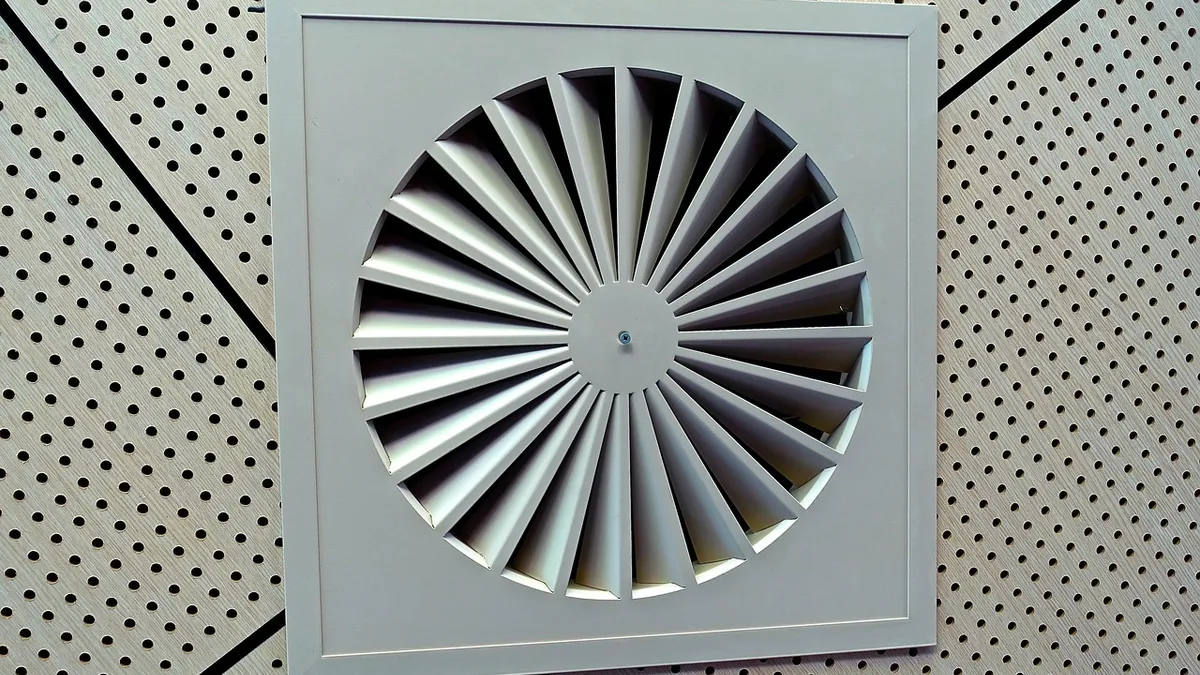
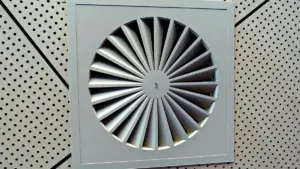
Image: MemoryCatcher via Pixabay
A bathroom fan that hums but the blades don’t spin means power is reaching the motor, but something is stopping it from turning. After the power is off and confirmed dead, a hand-spin test points to one of three causes: a seized bearing, a failed capacitor, or a wiring fault — and each needs a different fix.
Key takeaways
- Turn the power off at the breaker before touching anything. A humming motor is still energized — don’t assume the wall switch alone makes it safe to open the housing.
- A hand-spin test, done with the breaker confirmed off, tells you a lot. Stiff, gritty, or frozen usually points to a seized or worn bearing. Spins freely by hand usually points to the capacitor or the wiring instead.
- Sealed modern bath-fan motors aren’t built to be oiled or rebuilt. Once a bearing has seized, the fix is normally a replacement motor or a new fan, not a repair.
- Stop and call a licensed electrician if you’ve ever felt even a slight shock from the switch or housing, see melted insulation or scorch marks, or the breaker trips again once you restore power.
- “Just replace it” skips a step. The check order below narrows down what’s actually wrong before you spend money on a new fan or motor.
What does it mean when a bathroom fan hums but the blades don’t spin?
A humming sound with no blade movement tells you two things at once: electricity is reaching the motor (that’s what’s making the hum), and whatever normally converts that electricity into spinning motion isn’t working. Both halves matter for figuring out the cause. If the motor were simply dead, you’d typically hear nothing at all; the hum is the motor coil or the start capacitor trying and failing to get the rotor moving.
The U.S. Consumer Product Safety Commission’s home electrical safety guidance treats this kind of symptom as a warning sign on any small appliance: unusual noise during operation is listed alongside smoke and sparks as a sign the parts inside have been damaged, and the guidance is to stop using the appliance and have it checked rather than keep running it.
Is it safe to touch the fan while it’s humming?
No. Don’t open the housing, touch the blower wheel, or wiggle any wiring while the fan is making this noise and still connected to power. A stalled motor that keeps drawing current can run hot, and you have no way to tell from outside the housing whether the capacitor, the windings, or a loose connection is the problem.
Panasonic’s installation manual for its WhisperCeiling bathroom ventilating fans is explicit on this point regardless of brand: it instructs owners to always disconnect the power source before working on or near the fan, motor, or junction box, and states that any servicing beyond routine cleaning should be left to a qualified technician. Treat both instructions as the baseline for any bath fan, not just that one product line.
The safe check order
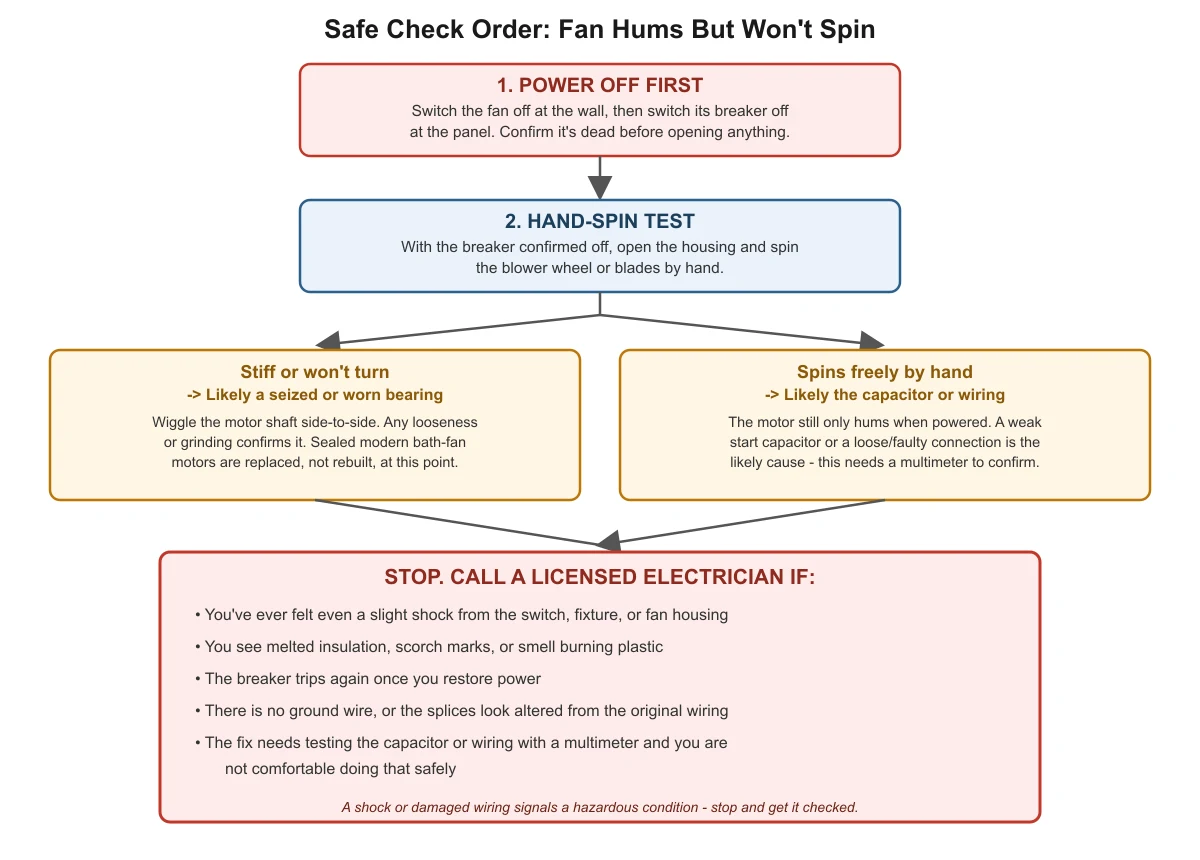
Work through these steps in order. Don’t skip ahead to the hand-spin test before the power is confirmed off, and don’t go past step 3 if you hit one of the stop conditions. The split at step 2 — stiff or won’t turn versus spins freely — is a general rule of thumb for small single-phase motors like the ones in bath fans; it narrows down where the problem likely is, it isn’t a certain diagnosis until the motor is actually tested or opened further.
| Step | Do this | What it tells you |
|---|---|---|
| 1. Cut the power | Switch the fan off at the wall, then switch its breaker off at the panel. Confirm the right breaker by checking the switch no longer makes the fan hum or respond. | Confirms the circuit is de-energized before you open the housing or touch anything inside it. |
| 2. Hand-spin test | With the breaker confirmed off, remove the grille and pull down the fan or blower assembly (most drop on a spring clip or two screws). Spin the blower wheel or blades by hand. | Stiff, gritty, or won’t turn at all = a mechanical bind, most often a seized bearing. Spins freely = the electrical side (capacitor or wiring) is the more likely suspect. |
| 3a. Seized or worn bearing | Wiggle the motor shaft side-to-side (not spinning it — just checking for play). Looseness, grinding, or a wheel that won’t turn by hand all point here. | Modern bath-fan motors are sealed and are not designed to be oiled or rebuilt. This points toward replacing the motor or the whole fan, not a repair. |
| 3b. Failed start capacitor | The wheel spun freely by hand in step 2, but the fan still only hums once power is restored. | A weak or shorted start capacitor is a common cause of this pattern. Confirming it needs a multimeter and knowing how to safely discharge a capacitor first — at or past the edge of a basic DIY check. |
| 3c. Wiring or switch fault | The wheel spun freely, you’ve ruled out an obvious capacitor swap, and you still get only a hum or nothing at all. | Points to a loose connection, a failing wall switch, or house wiring that needs checking with test equipment, not by eye. |
| 4. Stop and call an electrician | Any of the conditions in the next section apply. | These are signs of a hazardous wiring condition. Don’t keep testing it yourself. |
Seized bearing vs. failed capacitor vs. wiring fault: telling them apart
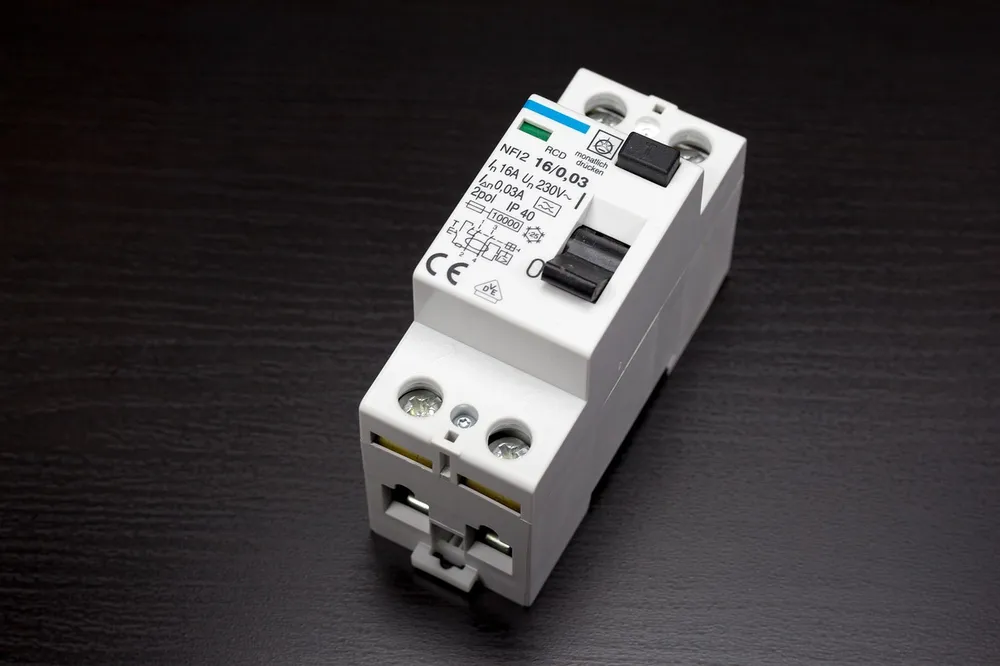
The hand-spin test is the dividing line. If the blower wheel is stiff, gritty, or won’t turn by hand at all, you’re almost certainly looking at a mechanical problem inside the motor itself — most often a bearing that’s worn or seized. Older fans with oil ports can sometimes be re-lubricated, but most fans sold in the last couple of decades use sealed, permanently lubricated motors; Panasonic’s own installation manual for its WhisperCeiling line, for example, describes its motor as designed for a long operating life with no lubrication or rebuild procedure listed anywhere in the document, which matches how most current bath-fan motors are built. Once that type of motor seizes, replacement is the normal path.
If the wheel spins freely by hand with the power off, the problem is more likely electrical: a start capacitor that’s lost its charge-holding ability, or a wiring/switch fault that’s delivering just enough current to make the motor hum without enough to start it turning. Telling a weak capacitor apart from a wiring fault reliably needs a multimeter and some basic capacitor-testing knowledge — checking resistance or capacitance across the terminals after safely discharging it first. If you don’t already have that equipment and experience, this is a reasonable point to call in a licensed electrician or an appliance repair technician instead of guessing.
One documented cause worth ruling out early if your fan is wired to any kind of dimmer-style speed control: Panasonic’s installation manual specifically warns against it, stating “Do not use this fan with any solid-state speed control device. Solid state controls may cause harmonic distortion which can cause motor humming noise.” If your fan was ever wired through an aftermarket speed control or dimmer not designed for motors, that’s worth checking before you assume the motor itself has failed.
If your fan spins up fine and runs, but the airflow itself feels weak, that’s a different problem with a different fix — see our guide to a bathroom exhaust fan not pulling air. And if what you’re hearing is more of a rattle or buzz that changes with fan speed, rather than a steady hum with a stalled motor, check our bathroom fan rattling or buzzing noise fix guide instead — that’s usually a loose part, not a motor failure.
When should you stop and call a licensed electrician?
Stop testing it yourself and call a licensed electrician if any of these apply:
- You’ve ever felt even a slight shock (not static) from the switch, the fan housing, or the fixture.
- You see melted insulation, scorch marks, or smell burning plastic.
- The breaker trips again once you restore power.
- There’s no ground wire, or the wiring and splices look different from a standard factory setup.
- The next step needs testing the capacitor or wiring with a multimeter and you’re not comfortable doing that safely.
This list follows the CPSC’s own guidance for large appliances that have ever given someone a shock: “Do not touch the appliance until it has been checked by an electrician. Turn the power off to the appliance at the circuit breaker.” The CPSC’s reasoning is that a shock points to a seriously unsafe wiring condition that could injure someone who touches the appliance again, not a one-off fluke. The same logic behind workplace lockout/tagout rules applies here too: OSHA’s standard for controlling hazardous energy exists specifically because an unexpected restart “can result in serious injury or death,” which is exactly why you confirm a circuit is off, rather than assume it, before opening anything.
If you’re planning to replace the fan entirely rather than repair it, see our complete guide to how to vent a bathroom exhaust fan the right way for duct sizing, routing, and code basics once the new unit is in.
Frequently asked questions
Is it safe to leave a humming bathroom fan running while I decide what to do?
No. Turn it off at the wall switch right away. A stalled motor that keeps drawing current without turning can overheat, and continuing to run it risks further damage to the motor or, in a worst case, a wiring or fire hazard. Switch it off, then work through the safe check order once you’re ready, starting with the breaker.
Can I fix a humming fan myself by oiling the motor?
Only on older fans that have visible oil ports on the motor housing, which is uncommon on bath fans made in the last couple of decades. Most current bath-fan motors are sealed and permanently lubricated, with no oiling procedure in the manufacturer’s maintenance instructions. On a sealed motor, a seized bearing means replacement, not re-oiling.
The blower wheel spins freely by hand, but the fan still won’t start. What now?
That pattern points away from a mechanical bind and toward the capacitor or the wiring. Confirming which one needs a multimeter and some basic capacitor-testing know-how, including safely discharging the capacitor before touching its terminals. If you don’t have that equipment or experience, this is a reasonable point to call an electrician or appliance repair technician rather than keep guessing.
Does a humming bathroom fan that won’t spin pose a fire risk?
A stalled motor that keeps running can overheat, and damaged wiring or a failing switch (one possible cause of the hum) is itself a recognized fire and shock hazard in home electrical safety guidance. That’s exactly why the first step is switching it off at the wall, not continuing to run it while you investigate.
Do I need a permit or an electrician just to replace the fan motor?
A straightforward like-for-like motor swap inside the existing housing, on the existing circuit, typically doesn’t need a permit. But if you find no ground wire, damaged wiring, or anything that doesn’t match a standard factory setup while you’re in there, stop and bring in a licensed electrician — that’s no longer a simple parts swap.
Sources
- U.S. Consumer Product Safety Commission, Home Electrical Safety Checklist (Pub. 513, July 2008) — guidance on shock hazards, irregular appliance operation, and when to call an electrician. Checked November 12, 2026.
- Occupational Safety and Health Administration, Lockout/Tagout Fact Sheet (DEP FS-3529, 12/2022) — the core safety principle of controlling and verifying hazardous energy before servicing equipment.
- Panasonic Corporation, Ventilating Fan Installation Instructions, models FV-0511VQ1 / FV-1115VQ1 / FV-0511VQC1 (2017) — manufacturer safety warnings on disconnecting power before service and on solid-state speed controls causing motor hum.
bathroomexhaustfanventing.com Editorial Team. Last updated: November 12, 2026.